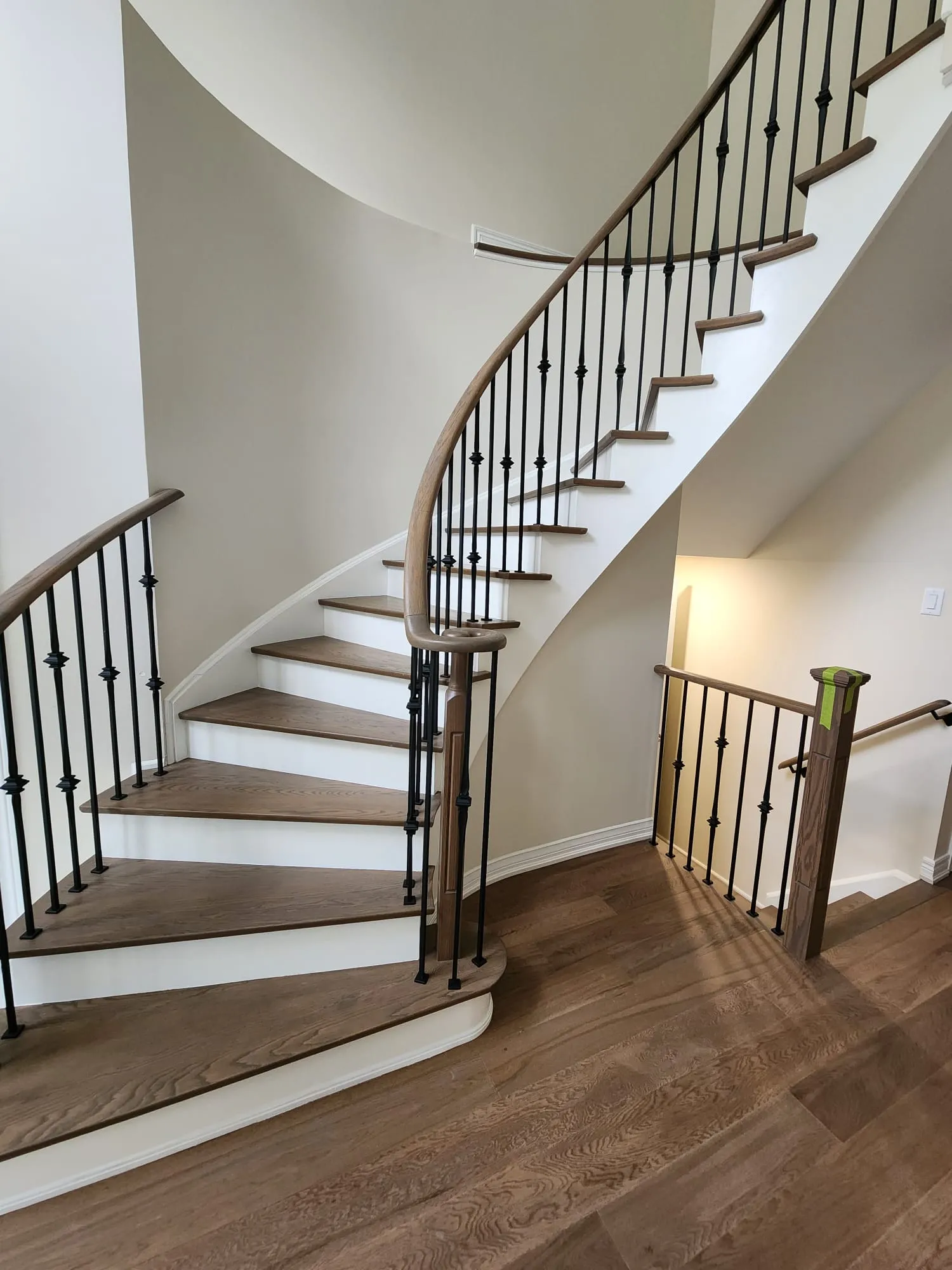
The staircase is often the first thing you see when you walk into a two-storey home. Replacing worn carpet and dated spindles with stained oak treads and wrought-iron balusters is one of the most visible upgrades you can make.
What a staircase upgrade usually includes
- Removing carpet, tack strips and old nosings.
- New oak treads, either capping the existing stairs or replacing the treads entirely.
- Painted risers, often white for contrast with the stained wood.
- New balusters, such as wrought iron or glass, with a new or refinished handrail.
- Staining the treads and handrail to match the surrounding hardwood.
Capping or full replacement?
If the existing stair structure is solid, new treads can often be installed over it. If the stairs creak badly, are out of level, or the layout is changing, rebuilding the treads may be the better option. We check the structure during the estimate and explain the options.
Matching the floors
Stairs look best when they match the hallway and landing floors. If you're replacing flooring at the same time, plan both together so the stain colour and wood species line up. Curved and winding staircases take more careful fitting, but the result is worth it.
Living with the work
Stairs are usually the only route between floors, so we plan the order of work to keep them usable for as long as possible and protect the finished treads while the rest of the job continues.