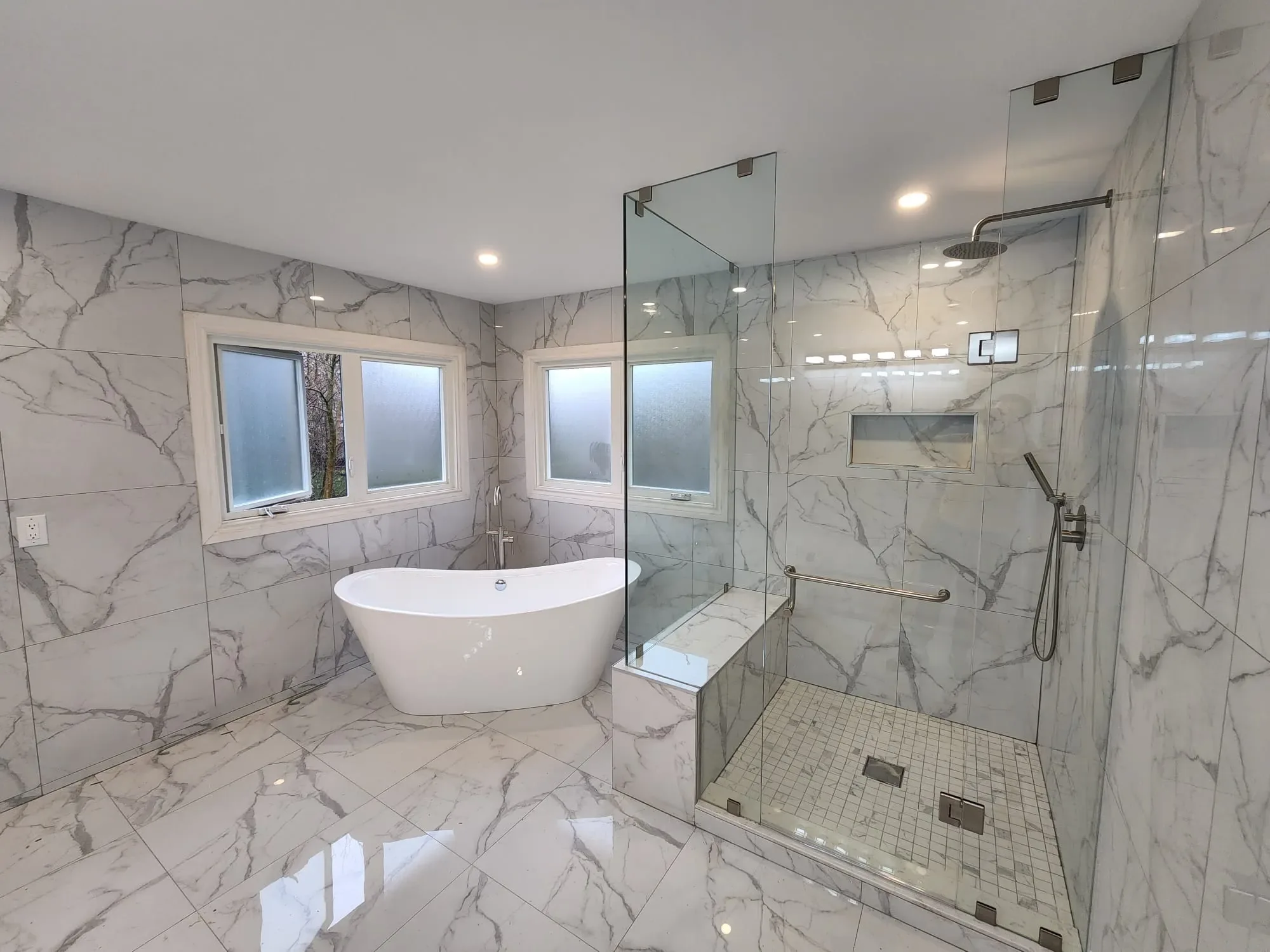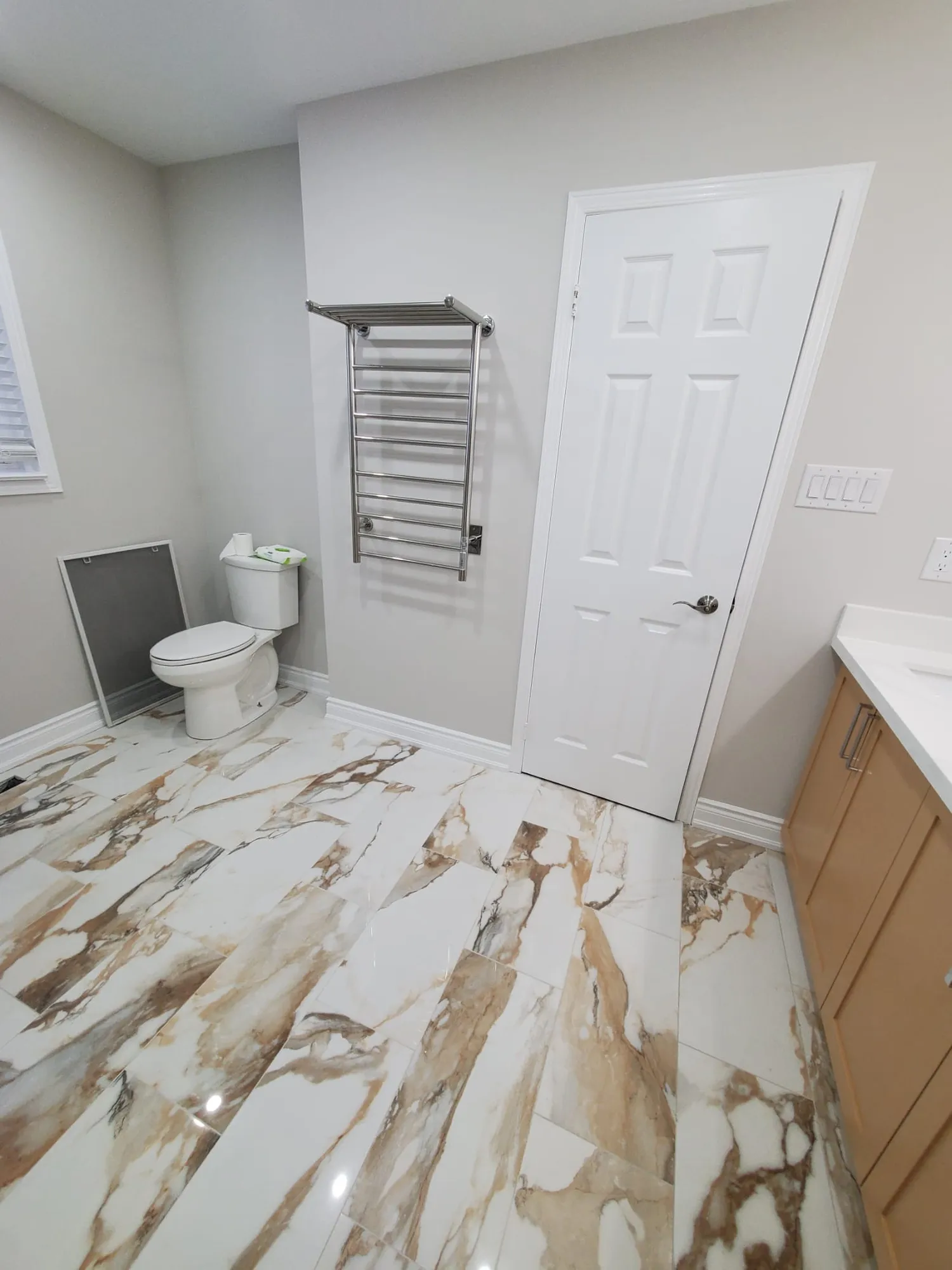
Large-format porcelain, usually anything with a side of 24 inches or more, has become the go-to finish for modern bathrooms, entries and open-plan floors. Marble-look and stone-look tiles in particular give you the look of natural stone with far less upkeep.
Why homeowners choose it
- Fewer grout lines, so floors and walls look calmer and are easier to clean.
- Porcelain is dense and absorbs very little water, which suits bathrooms and entries.
- Marble-look and stone-look prints give a high-end look without sealing natural stone.
- The same tile can often run from the floor up the shower walls for a seamless look.
What it asks of the installer
Big tiles are less forgiving than small ones. The floor or wall underneath has to be flat, not just level, or the edges of neighbouring tiles will sit at different heights. That's called lippage, and it's the most common problem with large-format installations.
- Flattening the substrate before tiling, with patching or self-levelling compound where needed.
- Full mortar coverage under each tile, often by buttering the back of the tile as well as the floor.
- Levelling clips to keep tile edges flush while the mortar sets.
- Careful layout, so cuts land in sensible places and veining flows across the room.
Things to decide early
Large tiles are heavy and can be harder to get up stairs and into small rooms, so we plan delivery and layout together. If you love a particular marble pattern, buy a little extra: different batches can vary slightly in shade, and spare tiles make future repairs easy.